Owl
Overview
Challenge was to deliver a research plan and insight-driven design(only wireframes) for a convenient and personalized service which offers commuters tech-savvy curated foods and drinks while focusing on their wellbeing.

Wellness
I found out that people often think about wellness in terms of
physical health, but it is so much more.
Wellness is a
holistic integration of physical, mental, and spiritual wellbeing,
fueling the body, engaging the mind, and nurturing the spirit.
Wellness is a professional as well as a personal responsibility
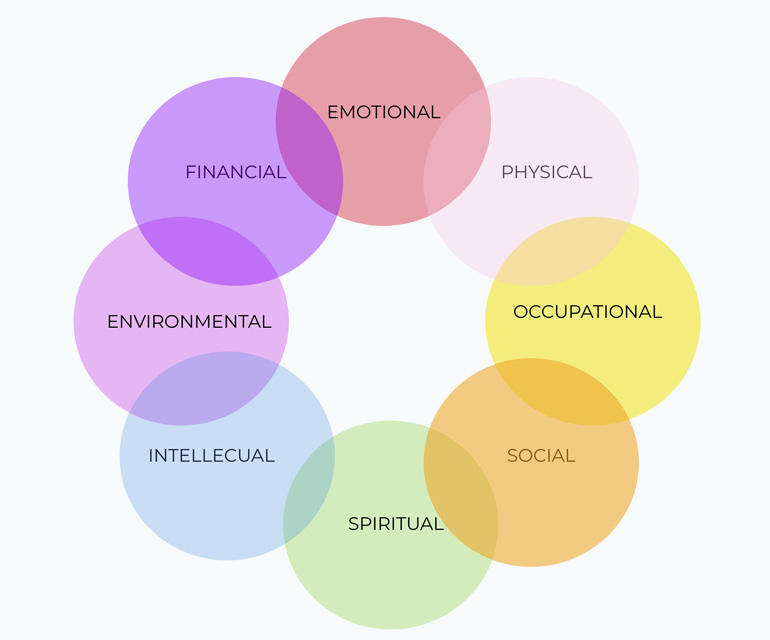
that encompasses eight mutually interdependent dimensions:
physical, intellectual, emotional, social, spiritual, vocational,
financial, and environmental.
Physical wellness is
about caring for your body to stay healthy now and in the future.
It is about getting enough nutrition, keeping yourself hydrated,
doing exercise regularly, and managing your weight. In the
nutrition part, it is crucial to nurture your body by eating a
well-balanced diet. Filling yourself with a variety of nutrients
and vitamins will not only help prevent illness but will also keep
your body functioning at its best.
Although I’ll focus
only on the nutritional side of the commuter’s physical wellbeing,
it is good to keep in mind the related matters and other
dimensions of wellness.
Understanding the potential
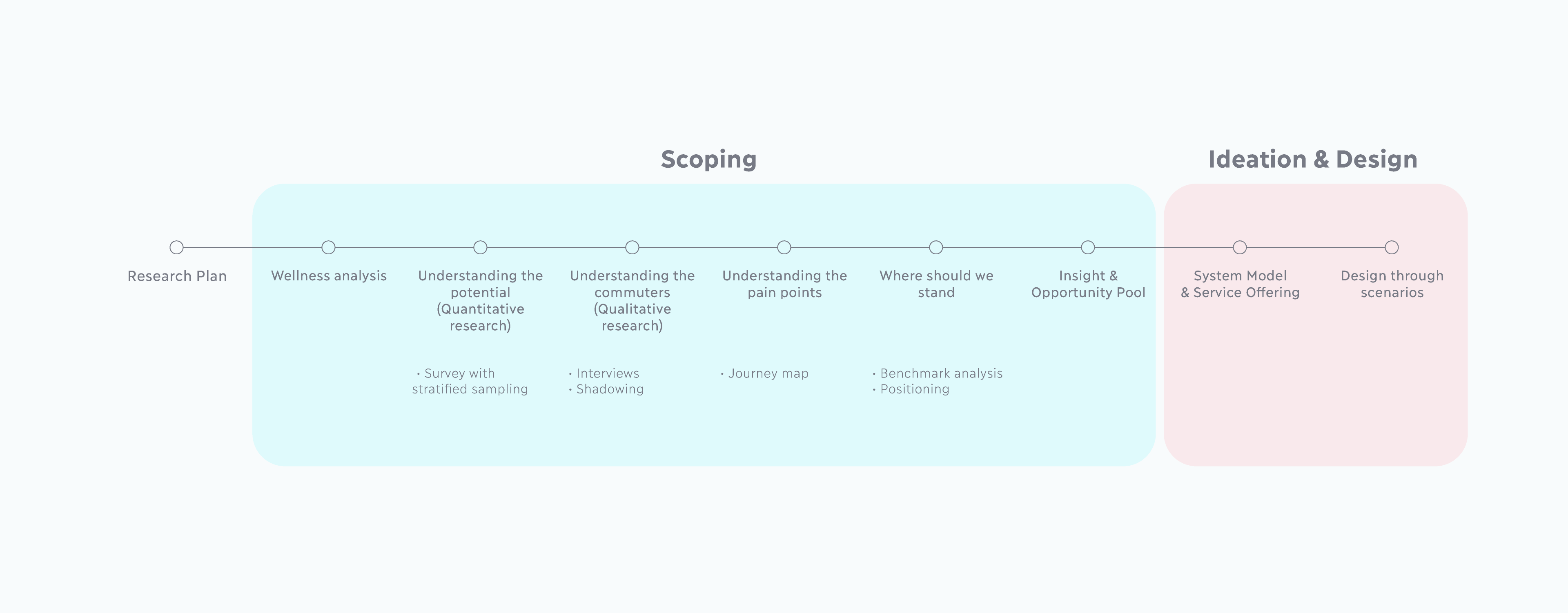
I would do quantitative research to see the problem on a larger
scale and to find out the number of possible consumers in
İstanbul. I hoped to gain some data on how many commuters worry
about their eating habits and how many of them are willing to
change their diet for a healthier way. I think stratified sampling
could help me to figure those out. Because with stratified
sampling, I could divide the population:
- By their social class to see the relation of this problem with people’s income.
- By their education level to see if educated people are more health-conscious.
- And by their age to see when people start worrying about their eating habits.
Understanding the Commuters
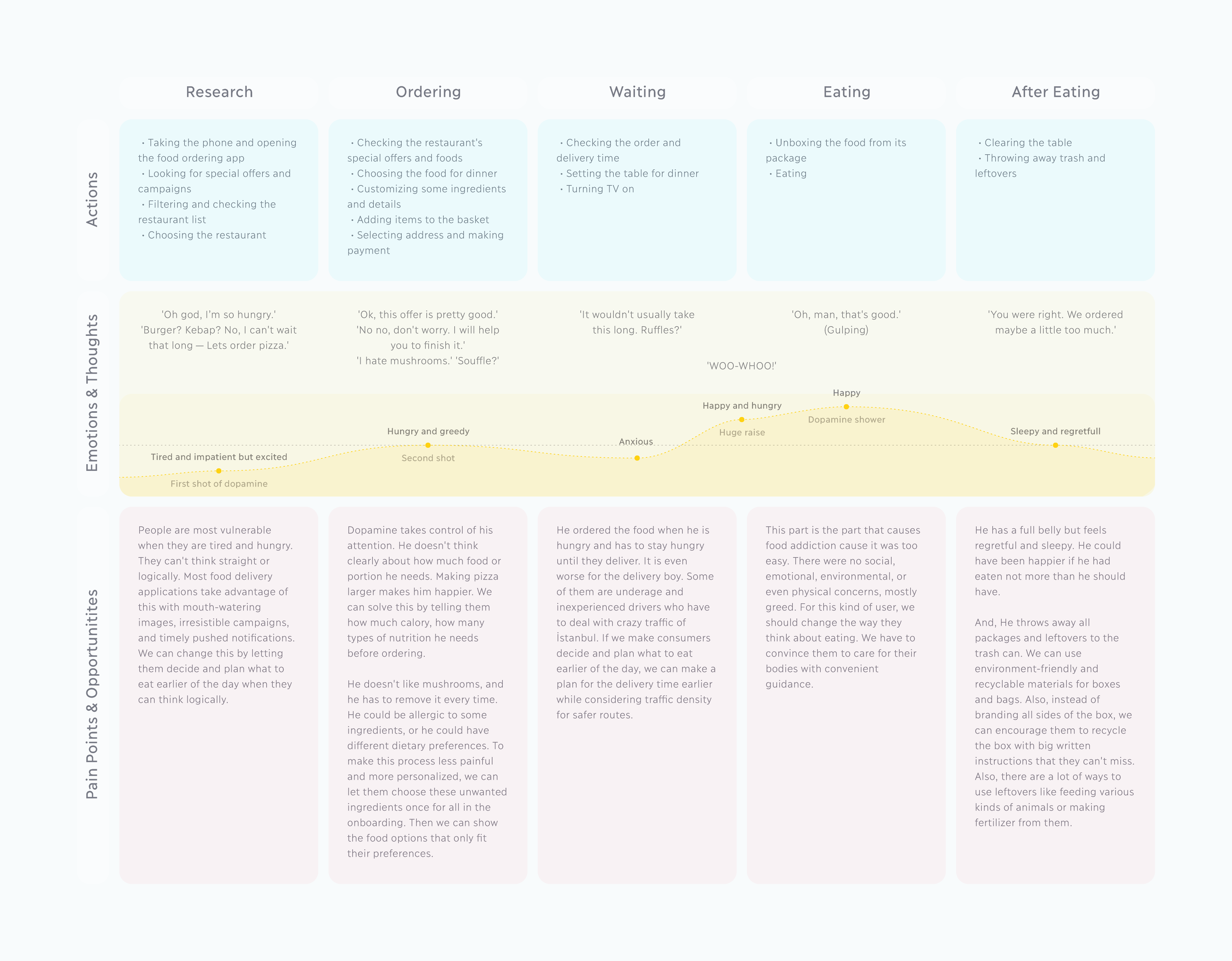
Commuters have a hectic lifestyle and feel fatigued after a long day. For this type of user, I wanted to understand what their motivations and triggers are. How do they decide what to eat? What are the influencing factors? What do they think about eating healthy? I hoped to gain some insights into the basic decision-making process when figuring out what to eat. After defining the questions I interviewed four people and mapped the process from the user’s perspective.
They know and enjoy cooking, but it's a hassle
Some of them mentioned that they like to explore and enjoy trying new recipes either in social settings or on weekends. However, after a long day, the effort of cooking and cleaning feels too much, so they often avoid it.
Picky about food choices
Taste preference, price, and delivery time are the biggest
factors that guide their food choice. While they care a lot
about cost, they still want high-quality ingredients and won’t
settle for less.
Other factors include sensory attributes, availability,
convenience, cognitive restraint, and cultural
familiarity.
Sticking to the usual
When tired and hungry, people don’t feel like trying something new and prefer to go with what they know is quick and reliable. That’s why they tend to order from the same places and eat the same meals.
Where should we stand?
If we want this system to work sustainably and efficiently, we
need to find a way to supply healthy food. For now, let’s assume
we have a working organic food supply.
To position
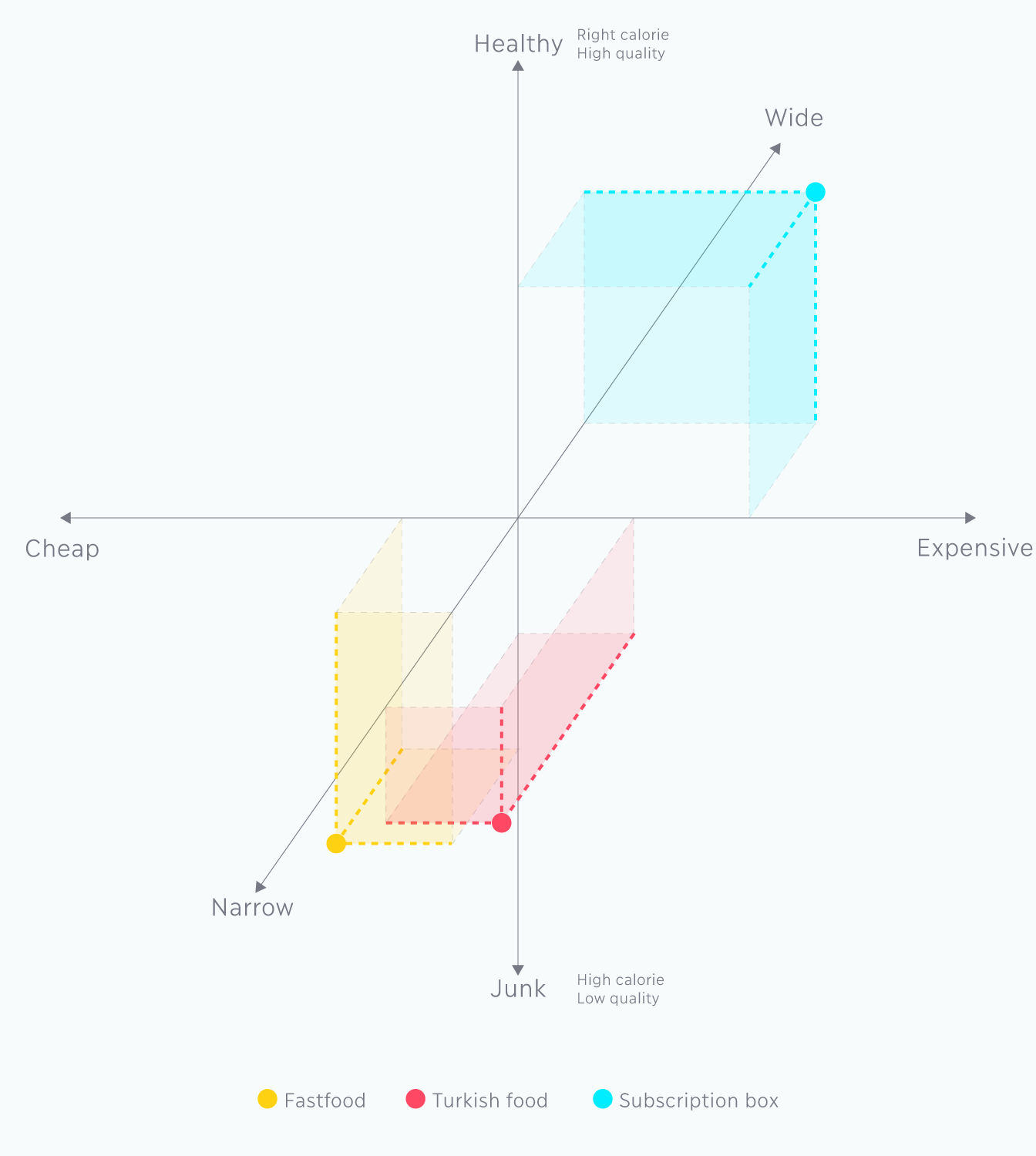
ourselves in the market, I have prepared a chart that includes the
price, quality, and personalization dimensions that are valuable
for consumers. We stand for commuter’s wellness, want to be sure
they get enough nutrition and want to deliver food on time.
I prepared three groups, and each group represents the
average of the restaurants belonging to that group. Fast
food(e.g., Burger King, McDonald's, KFC), Turkish food(e.g.,
kebap, dürüm, döner), Subscription box(e.g., Fitchef, Mealbox).
Recipes
Meal Planner
Logging
Activity